Tree size and condition
Height, trunk diameter, canopy spread and structural defects determine how the tree can be cut and controlled. A dead or decayed trunk may be unsafe to climb, which can require another removal method.
Serving Roswell, Georgia & surrounding areas
Calls answered around the clock
Tree removal service in Roswell, Georgia
One call reaches a call center that takes your information so local tree contractor who handles removals in your area.
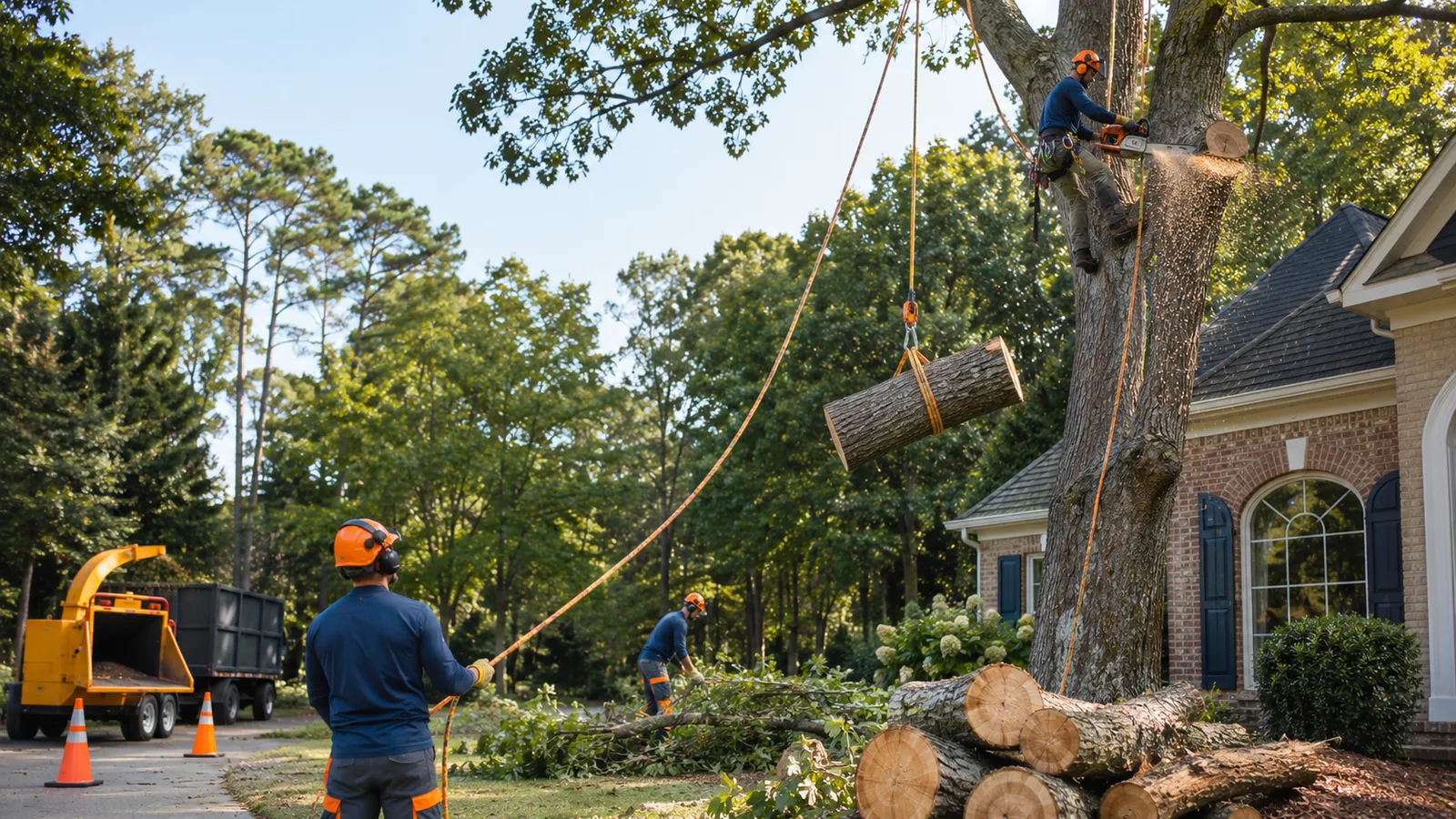
Tree removal cost in Roswell, GA depends on what the contractor finds at the property. Tree height matters, but trunk diameter, species, lean, decay, nearby structures, equipment access, utility lines, debris volume and stump work can change the scope substantially. A tall tree in an open yard may be more straightforward than a shorter tree leaning over a roof with no access for lifting equipment.
A contractor should assess the trunk, root plate, major unions and crown before discussing the work. Cavities, fungal growth, dead leaders, included bark, storm damage and movement around the root zone can affect the dismantling plan. The contractor also considers the drop zone and whether limbs can be lowered with rigging or the tree must be removed in smaller pieces. When overhead conductors are involved, the contractor should determine whether coordination with the utility is needed before work begins.
Roswell properties vary enough that access deserves careful attention. Established neighborhoods may have mature trees close to homes, fences and driveways. Lots near the Chattahoochee River corridor may also have slopes or protected areas that affect equipment placement and debris removal. Local rules can apply to tree work, and the City of Roswell's arborist and tree-removal requirements may affect whether approval is needed. The contractor should address those requirements for the specific property rather than assume every removal is treated alike.
Our call center takes caller information so they can be contacted by tree companies throughout Roswell, GA that serve the caller's area. There is no contact form or intake conversation with a middleman. You talk with the contractor directly, receive the quote from that contractor and decide whether to proceed.
Height, trunk diameter, canopy spread and structural defects determine how the tree can be cut and controlled. A dead or decayed trunk may be unsafe to climb, which can require another removal method.
Roofs, utility lines, sheds, pools, fences and neighboring property reduce the available drop zone. Rigging may be needed to lower limbs and trunk sections under control.
A contractor checks gate width, driveway strength, slope and room for a chipper, lift or crane. Limited access can increase the amount of climbing, hand carrying and cleanup involved.
The quote should state whether wood is chipped, hauled away, cut into logs or left at the property. Stump grinding is a separate scope unless the contractor includes it in writing.
Roswell tree regulations, easements, property lines and protected areas may affect the plan. The contractor should confirm which approvals apply before cutting begins.
One call connects you with a local tree contractor. You can ask about the proposed method, included cleanup and quote terms before making a decision.
An affiliate call-center representative takes your information so a local tree contractor serving that ZIP can contact you. Calls are answered around the clock.
You talk with the contractor about arranging an assessment. The contractor needs to see access, tree condition, nearby targets and the likely work zone before setting the actual scope.
Ask whether the quote includes rigging, equipment, debris hauling, log handling, stump grinding and site cleanup. Confirm who handles any required municipal or utility coordination.
The quote comes from the contractor, and the decision remains with you. Before work starts, clarify access arrangements, property boundaries and how the yard and driveway will be protected.
Stop making separate calls to tree contractors. One call reaches a call center that takes your information so local contractor who can assess the removal and provide the project quote.
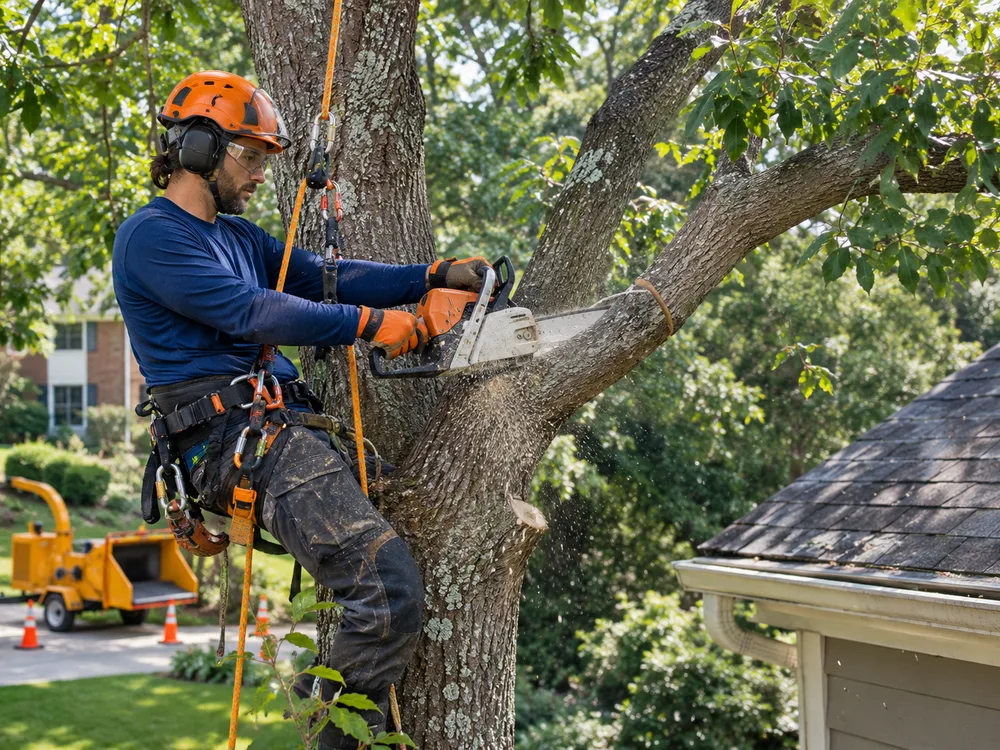
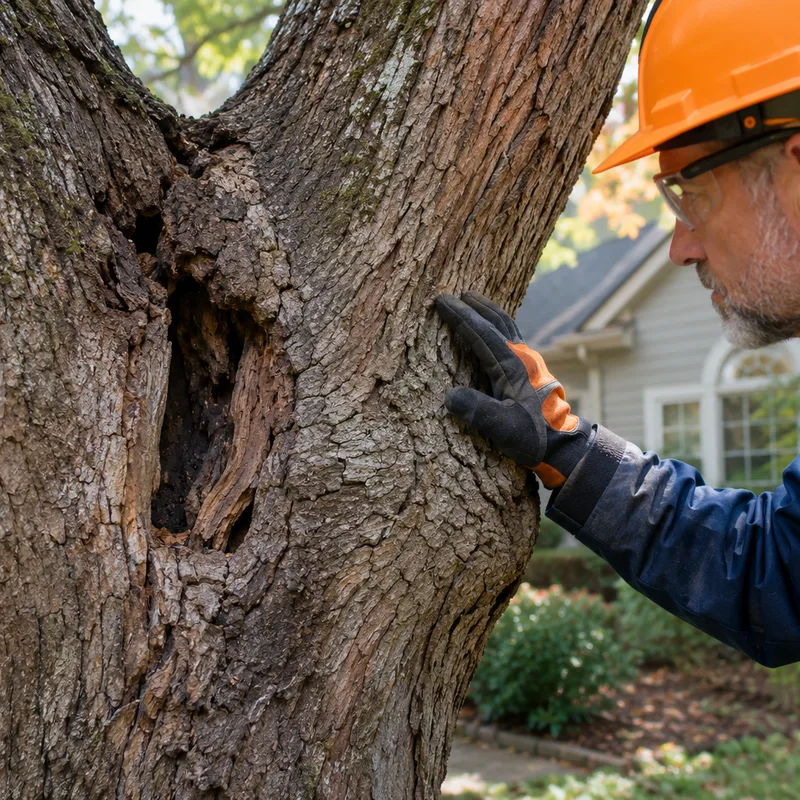
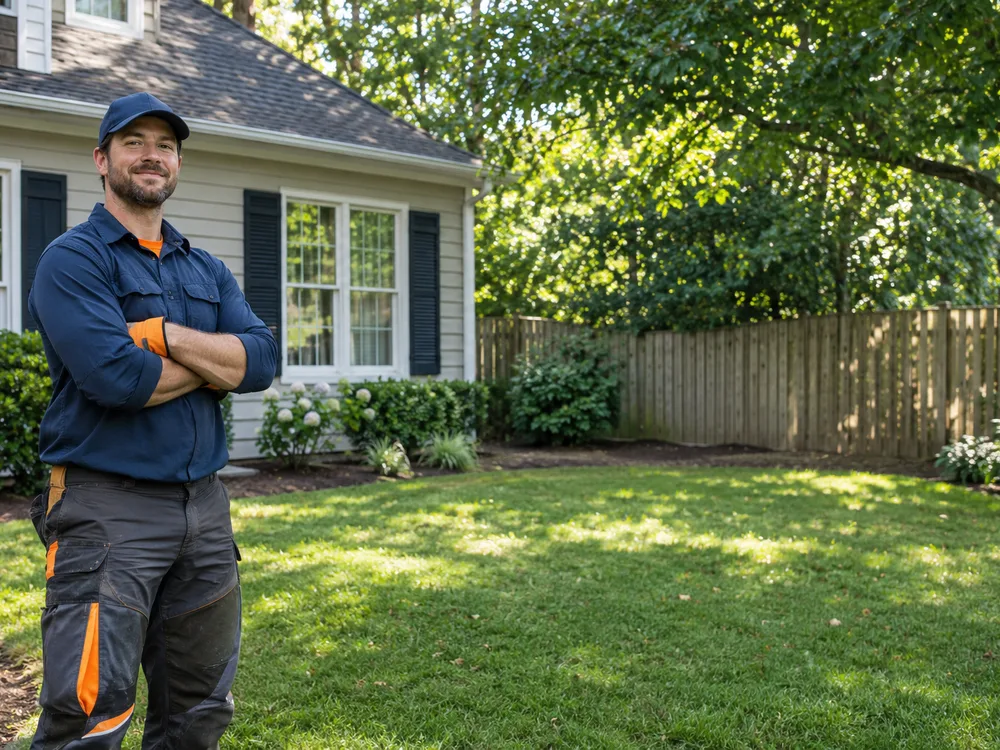
The contractor chooses a method after evaluating tree stability, access, overhead clearance and the drop zone. A sound tree with suitable tie-in points may be climbed, while severe decay can make climbing inappropriate. Lifts and cranes need adequate setup space and ground support.
Stump grinding should be listed separately or clearly included in the written scope. Ask how deep the contractor plans to grind, what happens to the grindings and whether surface roots are part of the work. Grinding removes the visible stump but does not extract the entire root system.
A tree removal quote should identify the trees, removal method, debris handling, stump work and cleanup responsibilities. It should also state whether logs remain, how access will be managed and who addresses any required permits or utility coordination.
A leaning tree cannot always be safely felled in one piece. Nearby buildings, roads, fences and utility lines may leave too little room, while decay can make the hinge wood unreliable. The contractor may recommend sectional dismantling with ropes or lifting equipment instead.
Approval may be required depending on the property, tree and reason for removal. Roswell has municipal tree-protection requirements, so the contractor should determine whether the proposed work needs review before cutting. Properties governed by an association may have separate rules as well.
Trees touching or close to overhead conductors require special planning. The contractor should identify the line owner and determine whether utility coordination is required; homeowners should not assume ordinary tree equipment can be used safely around energized conductors.
The work zone is affected by falling material, foot traffic and equipment movement. Ask where equipment will enter, how lawn and driveway surfaces will be protected, and whether plywood or ground mats are planned. The contractor should also identify irrigation heads, septic components and buried features that may be in the access route.
Call a call center, which will take your information so a local tree contractor serving your area can contact you. You speak with the contractor directly about the property, the assessment and what happens next.